WhatsApp Automation Software for Indian Gyms | GymPilot | GymPilot
WhatsApp Automation Software for Indian Gyms
A practical guide to WhatsApp automation software for Indian gyms. Covers features, API basics, compliance, and what gym owners should evaluate before buying.
GymPilot Team
16 min read
Looking for the product itself? See WhatsApp reminders for gym members — built for Indian gyms, with WhatsApp reminders and UPI tracking.
At 8:00 AM, the gym shutter is up, the floor is being swept, and the front-desk phone is already busy. A member has paid by UPI and sent a screenshot. Another wants to know why the fee is different from last month. Someone else's plan expires soon, but the reminder still has to be typed. By the time the trainer asks for the morning attendance list, the operator is searching through WhatsApp chats instead of preparing the centre for the day.
For an Indian gym with 30 to 300 members, WhatsApp automation software works best as an operations layer. It records what happened at the desk, sends the right receipt or renewal reminder, and gives the owner a usable trail for payments, attendance, and staff activity. It isn't primarily a campaign tool. It replaces the repetitive WhatsApp work that email and recurring card billing often handle in other markets.
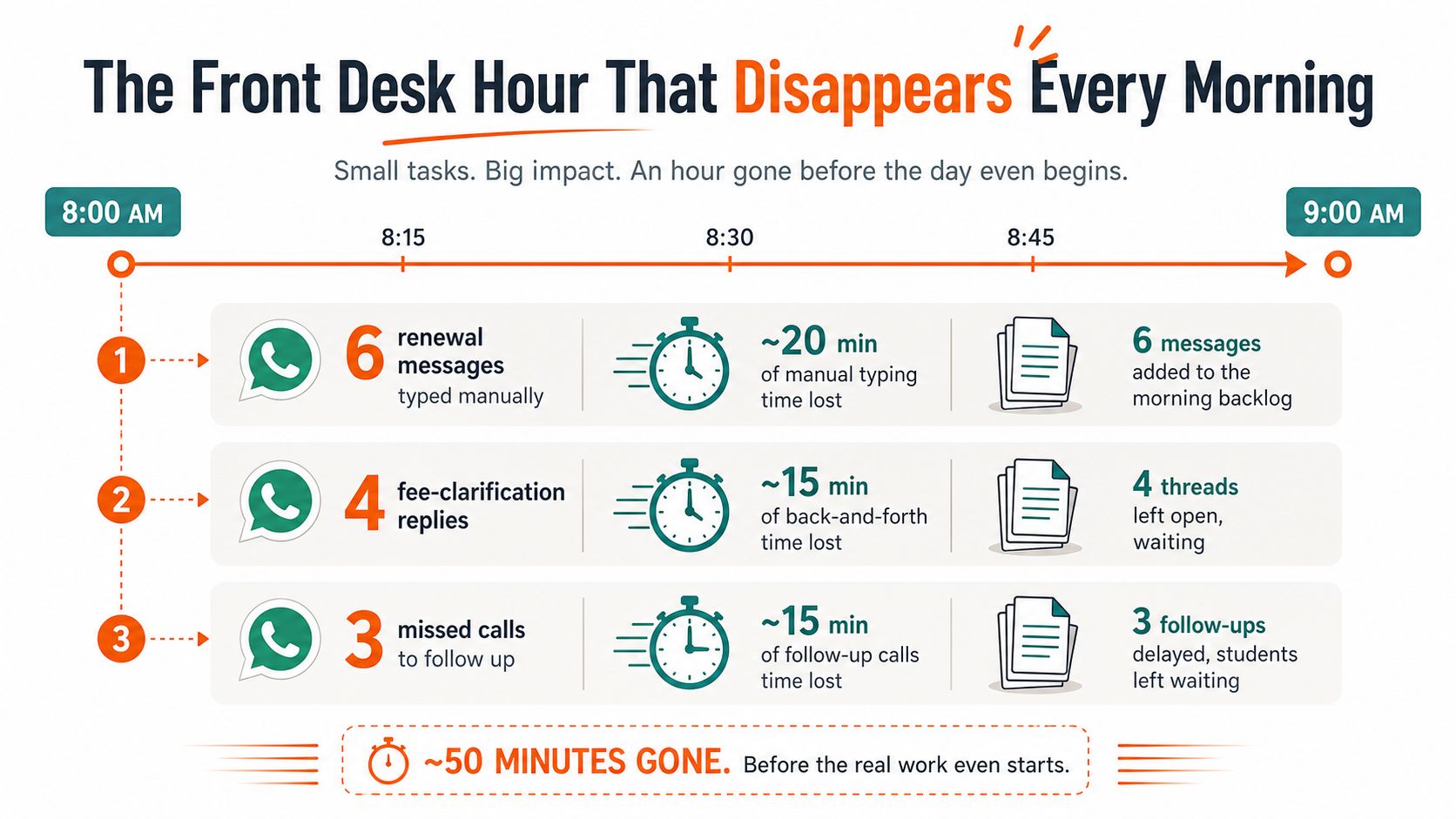
The Front Desk Hour That Disappears Every Morning
At a neighbourhood gym with around 150 members, the first hour can disappear before the first training session settles. Six renewal messages need to be written individually, four members ask for fee clarification, and two people send UPI screenshots that require checking against the bank account. A member card photo has to be forwarded to a trainer, while the 7 AM class attendance list still needs to reach the coach.
The front-desk operator may be doing all of this from a personal phone. There are no useful labels, no reliable message history outside the chat scroll, and no shared record showing whether a renewal was followed up. Cash collected at the counter gets written in a register or noted in a spreadsheet, while members who pay a few days late need a gentle WhatsApp nudge rather than an uncomfortable phone call.
The problem isn't message volume alone
Manual messaging creates several small failures:
Renewals get missed: A member may receive a reminder only when someone remembers to search for the expiry date.
Payments remain unclear: A UPI screenshot doesn't automatically prove that the payment was recorded against the correct member.
Cash lacks visibility: The owner may not know whether the amount entered in the register matches the amount collected.
Staff lose context: A conversation sits on one phone, so another operator can't see what was promised.
Follow-up becomes personal memory: The front desk depends on remembering who needs a receipt, a reminder, or a correction.
The cost is operational rather than dramatic. A message gets delayed, a receipt isn't sent, or a late payment is overlooked. Repeated across a month, those gaps make the owner spend time reconstructing events that should already be visible.
Practical rule: If a front-desk task depends on remembering a date, searching a chat, or copying payment details, it is a candidate for automation.
What WhatsApp Automation Software Does
For an Indian gym, WhatsApp automation software functions as an operations layer. It records desk activity and sends messages after events such as a new membership, a payment entry, or an approaching plan expiry. The system reads member details already stored in the gym platform, so staff can spend less time retyping the same receipt or reminder.
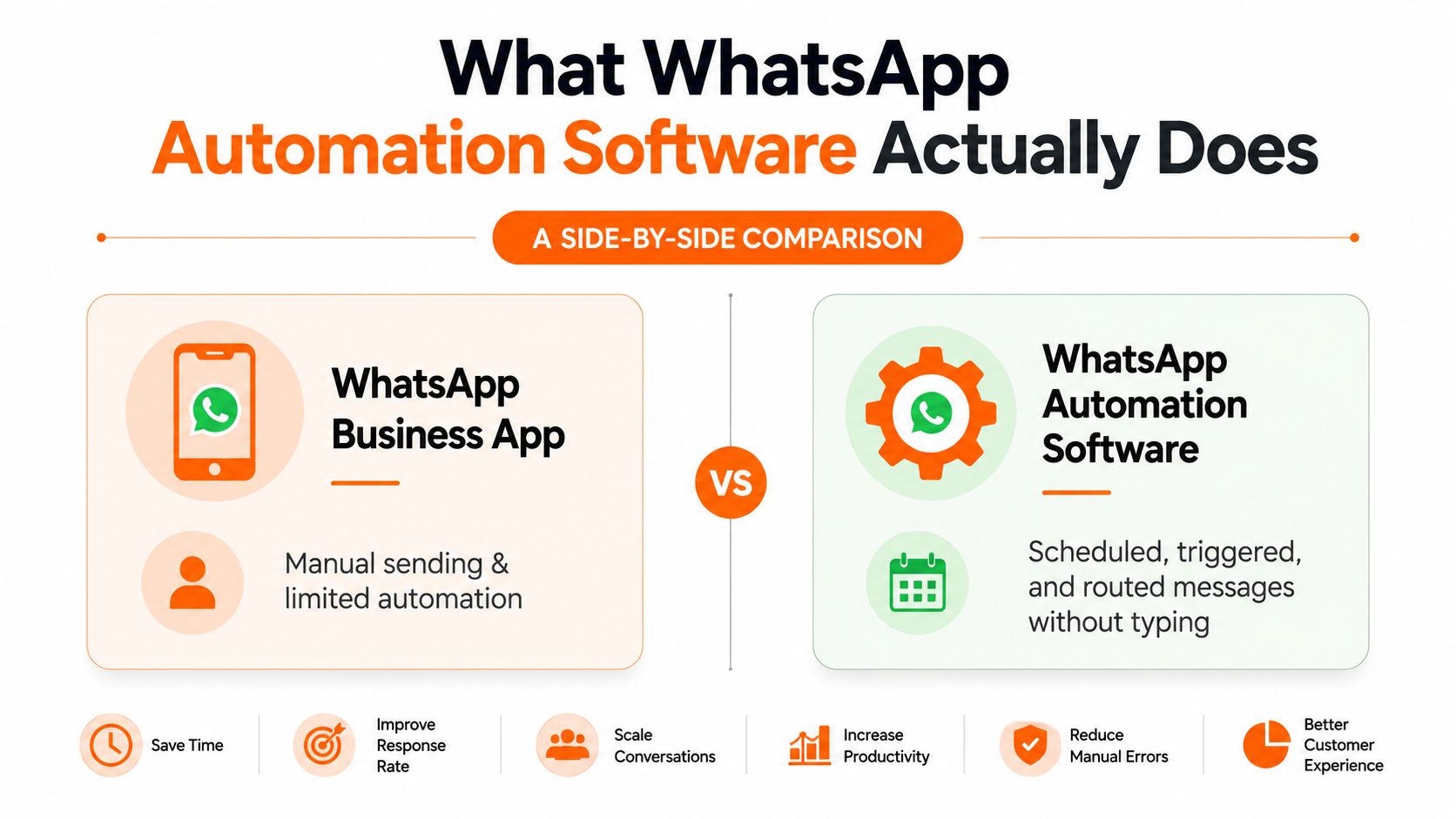
The choice between the WhatsApp Business app and the WhatsApp Business API determines how much control and scale a gym gets. The app runs on a phone and includes labels, greeting messages, away messages, and quick replies. It suits a solo trainer or small operator who wants saved responses while keeping every message under manual control.
App automation versus API automation
The WhatsApp Business API runs through a server and connects with a software platform, CRM, or gym management system. It supports scheduled and trigger-based messages, with platform rules that affect setup. A dedicated number generally cannot be registered on the consumer WhatsApp app or the Business app. Business-initiated messages sent outside the 24-hour customer service window require pre-approved templates, as explained in this India-focused WhatsApp Business API guide.
A gym can configure triggers such as:
A welcome message after creating a member record.
A receipt after saving a UPI, cash, card, partial payment, or dues entry.
A renewal message before the plan end date.
An owner alert after recording a payment or adding a member.
An attendance follow-up after a member stops checking in.
Chatbots need a clear job. If members mainly ask about fees, timings, validity, and payment confirmation, concise templates with quick human handover usually serve the desk better than a long conversation tree.
Core Features That Matter for Gym Operations
The right feature list starts with the desk, not the marketing team. A gym needs automation that follows a member record, a payment entry, or an attendance event.
Feature
Triggers When
Operational Problem It Solves
Welcome message
A new member joins
Confirms registration and gives the member a direct communication point
Payment receipt
A payment is recorded
Creates a clear record for UPI, cash, card, partial payments, or dues
Expiry reminder
A plan approaches its end date
Reduces dependence on manual renewal lists
Attendance follow-up
A member stops checking in
Gives staff a reason to contact an inactive member
Owner alert
A member is added or payment is entered
Keeps the owner informed about front-desk activity
Staff roles and activity logs
A staff member performs an action
Shows who changed or recorded a transaction
Revenue dashboard
Payment and plan data are updated
Gives the owner a current view of collections and plan performance
Renewal messages need dates
A generic broadcast saying “Renew your membership” is weak because it ignores the member's actual plan. A useful flow reads from the expiry field and sends a relevant reminder with the member's name, plan, validity date, and payment route. GymPilot describes a fixed renewal cadence of T-7, T-3, and T-1 day before expiry, with the next cycle starting after a renewal is recorded, as outlined in its gym management software overview.
Receipts must follow the payment record
The receipt should be generated only after the operator records the payment. That prevents a message from claiming that a payment was received when the desk has only seen a screenshot. It should also preserve the payment mode and reference details where available.
Attendance nudges, birthday messages, and plan milestones can support retention, but they should remain secondary. Most small gyms don't need an AI agent to answer every question. They need the system to send the receipt, flag the overdue account, and tell the owner when a member asks to freeze a plan.
Ways WhatsApp Automation Is Deployed
Indian gym owners usually encounter four practical setups. The first is a personal WhatsApp account with manual replies. It costs nothing extra, but it has no dependable workflow control and leaves the conversation tied to one person.
The second is the WhatsApp Business app. Labels, quick replies, and greeting messages help a solo operator organise basic communication. It can be suitable for a small membership base where one person handles every interaction, but it doesn't connect membership expiry, attendance, and payment data automatically.
The third is the WhatsApp Business API through a Business Solution Provider, or BSP. This route supports official templates, server-side triggers, and multiple staff workflows. It also brings template approval, opt-in management, dedicated-number requirements, and conversation-based charges.
The fourth is WhatsApp automation built inside gym management software. The gym owner records the member or payment in one place, while the platform handles the message workflow. This reduces the integration work, but the owner still needs to check how templates, number setup, payment data, and staff permissions are handled.
Option
Setup Effort
Monthly Cost
Best For
Consumer WhatsApp account
Minutes
No software charge
Personal, one-to-one communication
WhatsApp Business app
Minutes
No software charge, separate provider costs may not apply
Solo trainers and very small gyms
API through a BSP
Days or longer
Platform charge plus conversation-based messaging costs
Teams needing official automation and shared workflows
Built-in gym platform automation
Depends on the platform
Subscription and applicable messaging costs
Gyms wanting billing, members, and messages together
A shared Business app on one front-desk phone is a common half-measure. It breaks when two staff members try to send the same renewal message, or when the owner needs to check what happened after an operator leaves.
For a very small gym, the Business app may be enough. Once the workflow depends on membership billing, attendance-linked nudges, or multi-branch reporting, the API path or integrated gym platform is more appropriate. The decision should be based on the process being automated, not on the number of buttons shown in a demo.
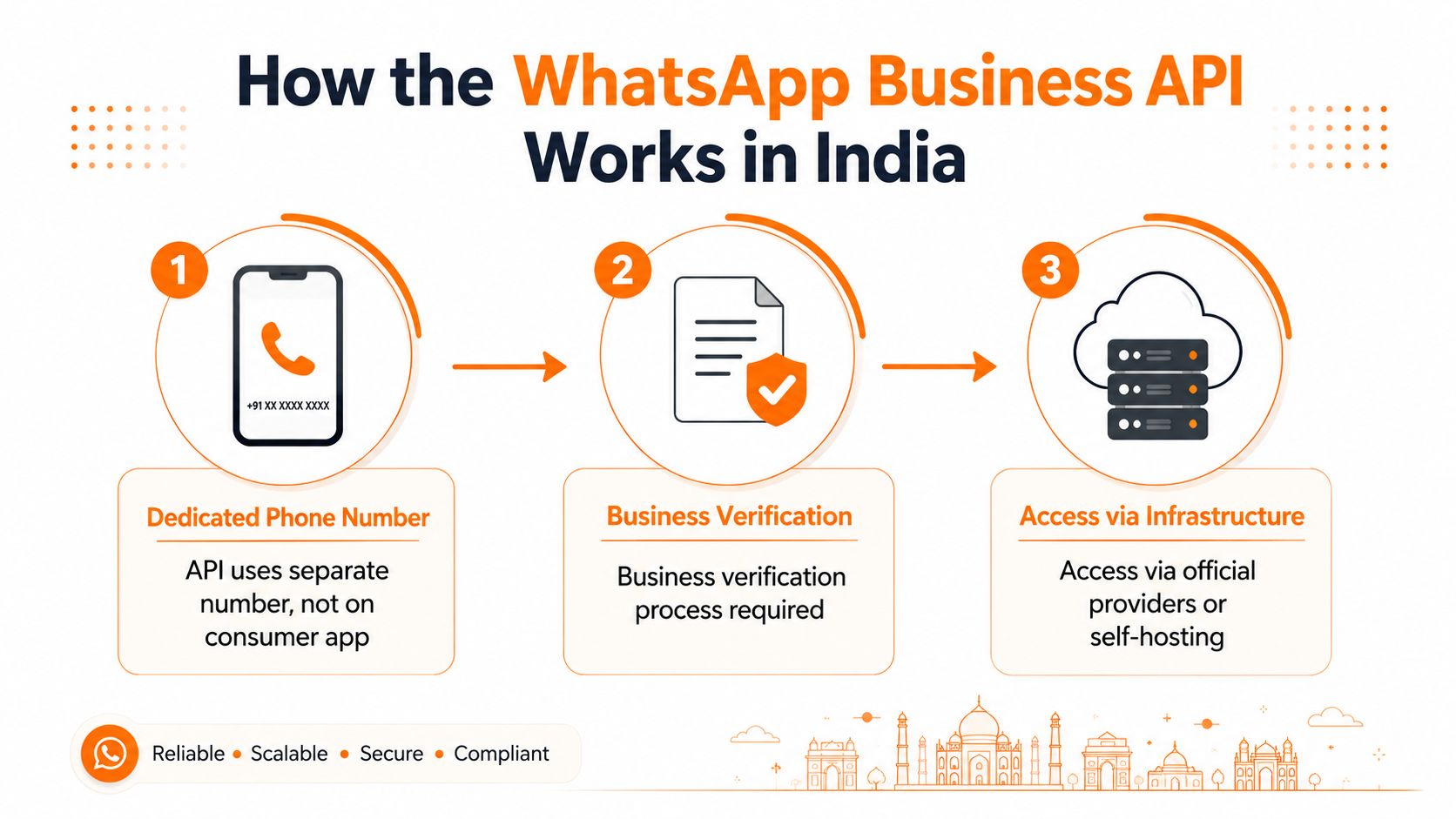
How the WhatsApp Business API Works in India
The API is not just the Business app with more features. It is a business messaging system with rules that affect setup, message content, and cost.
A gym generally needs a dedicated phone number that isn't currently registered on the consumer app or the Business app. The number, business details, display name, and templates need to be organised before the first automated reminder is sent. A provider may handle the technical connection, but the gym still owns the responsibility for accurate member data and valid opt-ins.
Templates and the 24-hour window
When a member messages the gym, the business can use free-form replies within the 24-hour customer service window. Outside that window, an outbound message normally needs an approved template. A reminder such as “Your membership expires soon” belongs in a utility workflow, while a discount campaign belongs in marketing. Authentication messages are used for verification-related communication.
The categories matter because Indian BSPs commonly price utility and authentication messages lower than marketing messages. A gym's operational flows should therefore prioritise receipts, renewal reminders, and payment notifications before promotional broadcasts. The WhatsApp Business foundations guide explains this distinction and why template economics affect the choice of workflow.
Provider selection needs care
Providers such as Gupshup, Wati, and Interakt can provide access to the API, but their dashboards, support, onboarding, and markups differ. The gym owner should ask whether the provider uses the official API, how template rejections are handled, and what happens when a member changes their number.
The cost question is no longer an afterthought. India-specific research estimates addressable WhatsApp Business spend at ₹4,200 crore for FY26, and connects the market's growth with Meta's 1 January 2026 rate update, as reported in the State of Indian WhatsApp Business 2026 research. A small gym doesn't need an enterprise campaign stack, but it does need a clear view of provider charges, conversation charges, and template usage before switching on reminders.
Receipts and Reminders in a Real Gym Workflow
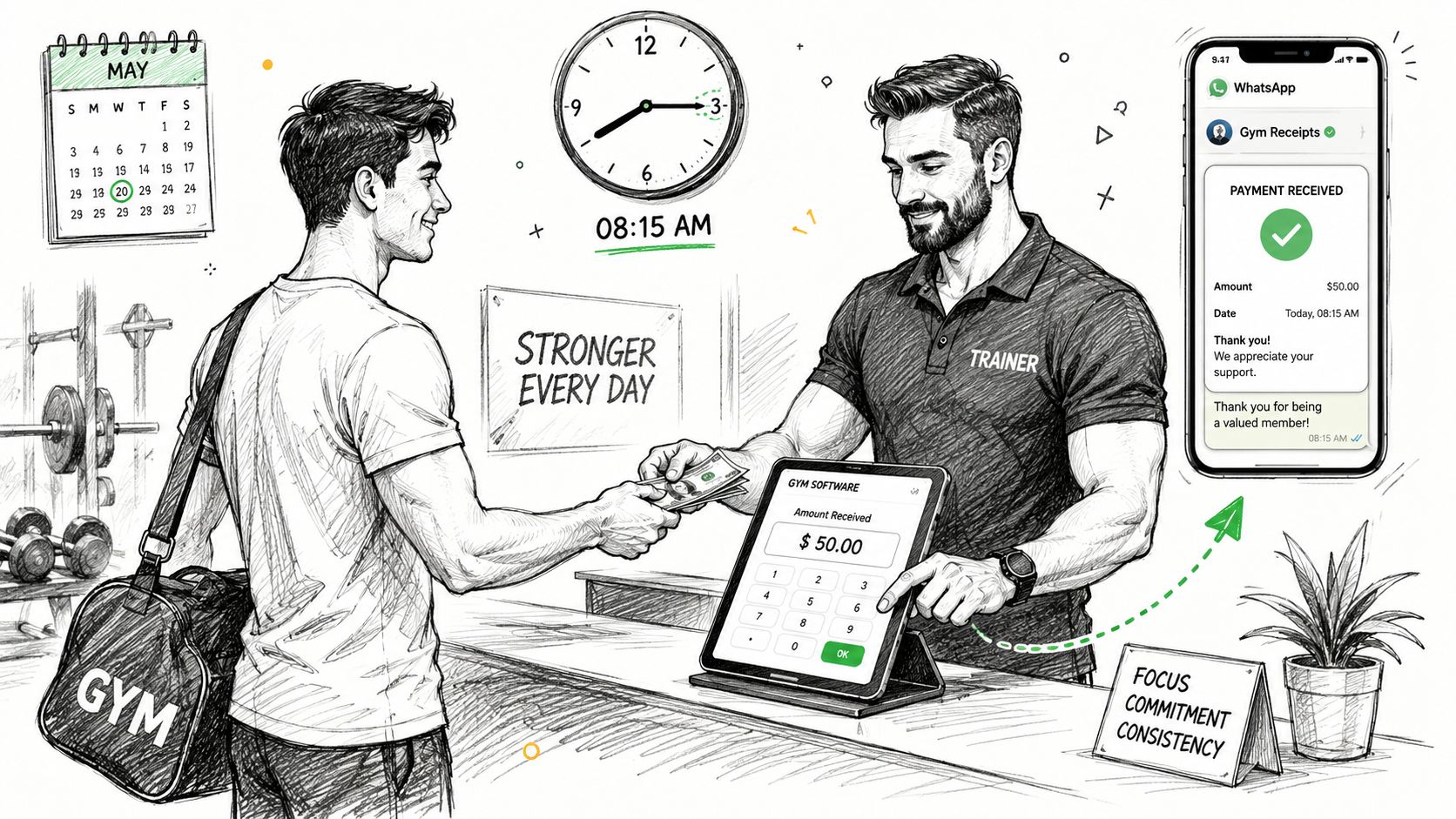
A member pays at the desk by UPI or cash. The operator selects the correct profile, records the amount and payment mode, and sends a receipt showing the member's name, plan, validity date, and amount. Card and partial payments should follow the same process. Any remaining dues stay visible in the record instead of being lost in a WhatsApp chat.
The reminder schedule should read from that membership record. It can send one message before expiry, another near the expiry date, and a follow-up after the plan ends if no renewal has been entered. GymPilot's public workflow uses T-7, T-3, and T-1 day reminders, with payment updates designed for quick front-desk handling, as described in this guide to automated WhatsApp messages for gyms.
A receipt is only useful if the underlying record is accurate.
Before enabling the workflow, test the routine failures that occur at a busy Indian gym:
Template approval fails: The reminder waits until its wording is corrected and approved.
The number is outdated: A member changes their phone number, but the profile still holds the old contact.
Leave status is ignored: A member on freeze or leave continues receiving renewal messages.
Payment status is late: The member pays at the counter, but staff forgets to update the record.
Timing feels intrusive: A message arrives late at night and prompts a complaint.
Set quiet hours, use bilingual templates where members need them, and show the next-cycle payment link beside the receipt when appropriate. The link provides another payment route, but it does not replace recording cash or UPI at the desk. One payment record must remain authoritative.
UPI AutoPay supports recurring mandates, but it works differently from a one-time UPI transfer. Razorpay's UPI recurring payments documentation explains that a mandate enables automatic debits at a defined frequency. Customers must receive a pre-debit notification at least 24 hours before a charge and retain the ability to cancel. A gym offering recurring billing still needs clear reminders, accurate payment status, and a process for failed or cancelled mandates.
Why WhatsApp Is the Operations Layer, Not the Marketing Channel
At a neighbourhood gym, WhatsApp earns its place after the member pays, not when a campaign reaches a list. A member expects confirmation after paying by UPI or cash. The owner needs proof that staff recorded the collection. Trainers need attendance updates, while the desk needs a reliable view of plans nearing expiry.
Those events run the gym. They are operational records, not marketing impressions.
Measure completed work, not message volume
A broadcast starts with the gym selecting contacts and sending a campaign. Automation should start with a payment entry, an approaching expiry date, or a missed visit. That distinction changes the questions an owner should ask:
Did the receipt match the saved payment?
Did the reminder arrive before expiry?
Did the owner receive the collection alert?
Did staff record cash and UPI consistently?
Did an attendance follow-up reach the correct inactive member?
Did messages stop for a frozen plan?
Read rates help diagnose delivery, but they do not show whether the gym collected dues or retained a member. Track renewal handling, accurate records, and completed follow-ups instead.
The operational layer also exposes weak processes. If staff can send a receipt without saving the payment, or reminders continue after a freeze, the software is hiding errors rather than reducing them. A useful system connects the member record, staff action, and owner notification so each event has an accountable source.
Promotional messages still have a role. The text marketing playbook for fitness provides broader campaign context, but campaign tools should follow operational control. Automating promotions before fixing payment records makes the wrong workflow faster.
A Practical Checklist Before You Choose a Tool
A demo can make every platform look capable. The useful test is whether the tool handles the awkward events that happen at an Indian front desk.
Verify the message foundation
The vendor should clearly state whether it uses the official WhatsApp Business API or an unofficial route. The owner should ask how opt-ins are stored, how templates are submitted, and what happens when Meta rejects a reminder. A provider that avoids these questions may leave the gym exposed to failed deliveries or account restrictions.
Test the payment workflow
The system should accept UPI, cash, card, partial payments, and dues in a way that remains searchable. A WhatsApp receipt must follow the saved payment entry, not a separate manual action. Ask for a live demonstration using a cash payment, a UPI reference, and a member who still has an outstanding balance.
Check the member fields
Expiry dates, plan names, start dates, payment history, attendance, and trainer assignment need to live on the member record. If staff must copy these details into a separate messaging tool, the gym has recreated the same manual work in a new interface.
Inspect staff control and data access
Front-desk staff shouldn't need access to sensitive owner settings. The platform should show who recorded or changed a payment, with timestamps that support reconciliation. The owner should also ask how data can be exported or recovered if the vendor closes the service.
Ask India-specific questions
GST invoices: Can the vendor issue invoices suitable for the gym's accounting process?
Language support: Can templates be written in English and relevant regional languages?
Small-gym experience: Does the workflow suit a single-centre operation, or is it built around enterprise campaign teams?
Quiet hours: Can messages be timed so members aren't contacted late at night?
Number changes: Can staff update a member's WhatsApp number without losing history?
Freeze handling: Does the reminder flow stop when a membership is put on hold?
The wider principles in this guide to streamline campaigns with automation are useful, but a gym needs to apply them to its own records and staff routines. A gym membership app can help extend member access, but it shouldn't distract from the core test: can the front desk record a payment once and produce the right operational message without retyping it?
GymPilot is one option that combines member management, payment tracking for UPI, cash, card, partial payments, and dues, revenue visibility, attendance and check-in, staff roles, email notifications, biometric check-in, product sales, and WhatsApp messages for welcomes, receipts, and expiry reminders. Owners can review the GymPilot pricing page for current commercial details rather than relying on old plan information.
A gym owner should audit one ordinary morning before choosing whatsapp automation software. Count the renewal follow-ups, receipt checks, cash entries, UPI confirmations, and owner updates that currently depend on memory. Then book a product demonstration and ask the vendor to process that exact workflow, including a late payment, a frozen membership, a changed phone number, and a bilingual reminder.
 GymPilot Team